Parkinson's Recovery Project
The Parkinson’s Recovery Project is a not-for-profit organization dedicated to making available, for free, the most up-to-date research information about Parkinson’s disease from the perspective of Asian medicine. From the viewpoint of recent research in Asian medicine, Parkinson’s disease is not an incurable illness. It is an electrical disorder.
The electrical circuit aberrations that present in people with Parkinson’s disease cause inhibition of dopamine release in the mid-brain’s motor initiation (movement) area and an increase in dopamine release in other areas of the brain such as the risk assessment area. Since 2001, western-medical research using brain scans has shown an increase in dopamine levels in the right anterior cingulate (risk assessment) part of the brain in people with Parkinson’s disease.
Most western-medicine research has consistently ignored the brain scan data showing elevated dopamine levels in certain areas of the brain in people with Parkinson’s, possibly because it conflicts with the long-disproved 1960s theory of “dead dopamine cells” and with the Parkinson’s theory promoted by the pharmaceutical industry.
The electrical patterns seen in people with Parkinson’s are consistent with electrical patterns that are supposed to occur temporarily in response to life-threatening, severe, physical and/or emotional trauma. However, in people with Parkinson’s, these electrical patterns have failed to revert back to normal after the trauma has ended. These current are “aberrant” in the sense that they are flowing in a life-threatening trauma pattern although the threat to life is no longer present. When the electrical aberrations in a person with Parkinson’s are corrected, the person’s Parkinson’s disease ceases.

New Spanish Translation
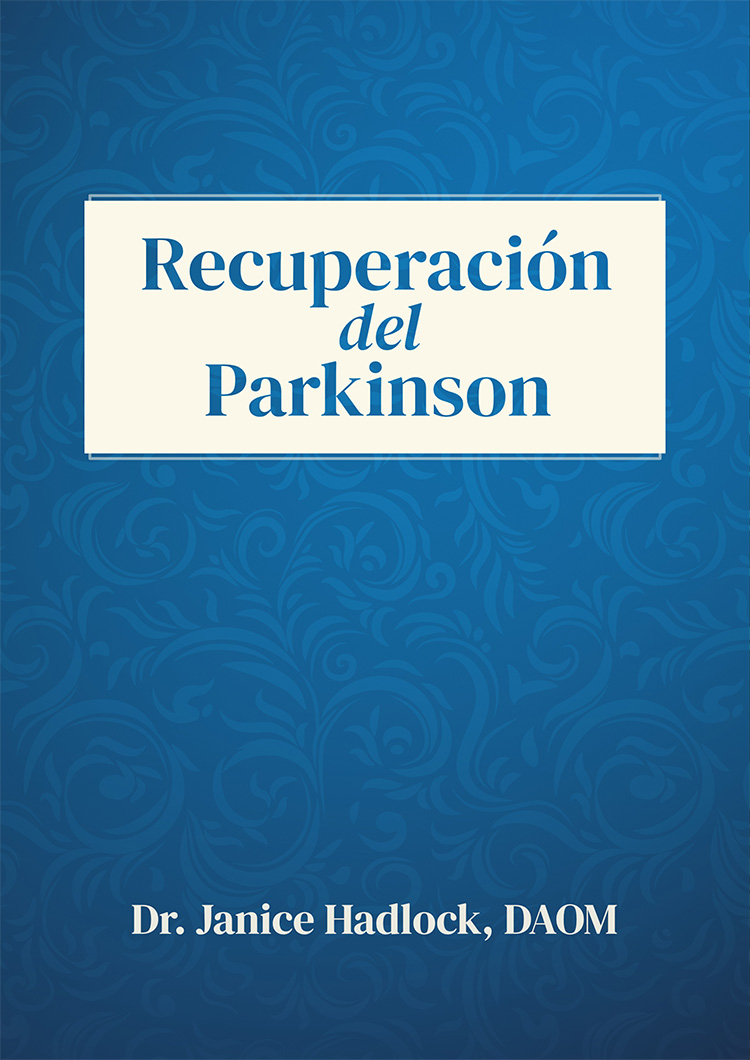
New! We now have a Spanish edition of Recovery from Parkinson's. Click here to download for free. Spanish is the language for which we receive the most translation requests. We are so excited and proud to be able to share our Parkinson’s findings with the world’s Spanish-speaking people. This professional translation was made possible by generous donations over the last few years. We are dedicating future donations for the next translation. Which language will be chosen has not yet been determined.
¡Nuevo! Ahora tenemos una edición en español del libro *Recuperación del Parkinson*. Haga clic aquí para descargarlo gratis. La edición en español solo está disponible como descarga gratuita. No está disponible en copia impresa.
Click for Biodata del Traductor
Luciana Ramos posee un Máster en Traducción Biomédica (Universitat Jaume I, España); un Máster de Especialización en Gestión de Proyectos y Desarrollo Organizativo de E-Learning, (UOC, España); y los títulos de Traductora Técnico-Científica y Literaria en Inglés y de Intérprete de Conferencias (Instituto de Enseñanza Superior “Olga Cossettini” de Rosario, Argentina). Cuenta con la certificación de la ATA para traducciones del inglés al español. Es docente de Medicina I y II de la Actualización en Interpretación Especializada (AATI-USAL) y del módulo de Traducción médica del Diplomado de traducción (OMT, México).
Es miembro de ATA, ALC, Tremédica (actualmente secretaria de la Junta directiva), Gala, Asetrad, AMWA y Colegio de Traductores de la Pcia. de Santa Fe. Ha dictado cursos, talleres y presentaciones en eventos nacionales e internacionales y ha publicado artículos en diversas revistas especializadas, como Multilingual, @Panacea, Caduceus y Caloidoscopio. Cuenta con más de 25 años de experiencia en el ámbito de la traducción y la localización, desempeñándose en la coordinación de equipos de traducción, creación de bases de datos terminológicas, planificación de producción, traducción/revisión/posedición, redacción médica, interpretación y control de calidad.
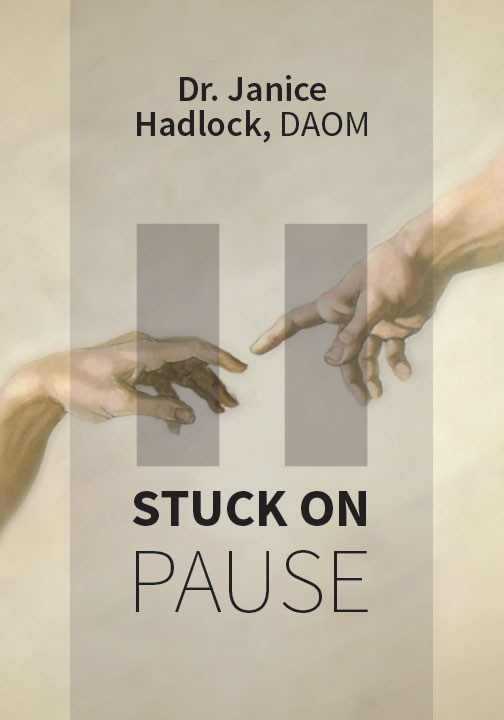
Stuck on Pause
The 2022 edition of Stuck on Pause is now available. Please go to the Publications page, and click on Stuck on Pause, for free download.
This edition is not complete: it still needs an index and some more work on two of the chapters. But it answers so many questions far better than the old edition, so Dr. Hadlock, DAOM wanted to get it posted as soon as possible. The finished version will hopefully be available by the end of 2022.
Publications & More
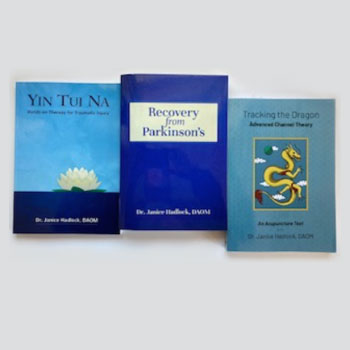
Five publications are available
Five publications are currently available, for free download, on this website. To download these books and postings, you must have Adobe Acrobat Reader. To download Adobe Acrobat Reader, CLICK HERE.
YouTube Video
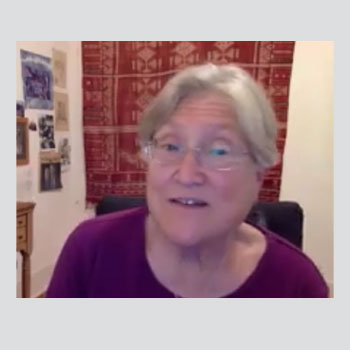 For those site visitors who would prefer a quick audio-visual explanation of the most current Asian-medicine research on Parkinson’s disease, a YouTube video can be accessed from the link below. This video was not made expressly for this website. It was recorded as a zoom lecture, a part of the book launch for the 2020 edition of Recovery From Parkinson’s. The video addresses the most common questions of both people with Parkinson’s and health practitioners who want to learn more about how they can help their Parkinson’s patients. The bookstore that hosted the internationally attended, free zoom lecture has generously made the video available to the Parkinson’ Recovery Project. The Project has converted the video to a YouTube.
- Youtube video: A one-hour, twenty-minute talk about our Parkinson’s research findings. This video addresses two aspects of recovering from Parkinson’s: the underlying causes of Parkinson’s and
- A plea to health professionals to learn how to correctly diagnose Parkinson’s disease. Please do read the rather lengthy video blurb, as well. The video is an introduction to our research, given as a zoom lecture in Dec, 2020. The blurb is an introduction to the introduction.